Times of Malaya when Pioneers, Planters, Miners, Civil Servants, Merchants, Police and the Military - both regulars and volunteers, during British Colonisation period, lived in the Straits Settlements of Singapore, Malacca and Penang and the Federated Malay States of Perak, Selangor, Pahang, Negri Sembilan including Unfederated States of Johore, Terengganu, Kelantan & Perlis. From 1786, the arrival of Francis Light; 1819, landing of Stamford Raffles with the Honourable East India Company & the administration of the Straits Settlements by British India through to being The Crown Colony in 1867 leading to WW1 and WW2 in Malaya. The Times of Malayan Emergency to the independence of Malaya in 1957 and the Republic of Singapore in 1965.

Wednesday, 4 August 2010

Colonial "Changkat" Hospital, Batu Gajah Perak

A little Herb Garden in the hospital grounds, probably in the European Section

The road entrance into the "Changkat" Hospital

Main Hospital Building - Colonial Architecture


Another view of the Main Hospital Building

The Batu Gajah hospital ( locally called , Changkat Hospital) was probably established in 1880’s and built with two sections, a European hospital and a District hospital for the locals ( natives). In the 1890’s, Dr Wright, the senior District Surgeon was in charge of the hospital. A colonial administrator and scholar, Richard Winstedt, would have been hospitalized in the European section for blood poisoning in about 1904, when he was an Assistant District Officer.

Batu Gajah, Perak

The sign board just at the entrance to God's Little Acre

Batu Gajah was selected as a new river port for the Papan Tin Mines in 1881. BY 1884, it was chosen as a new centre for Kinta administration. Residences for European officers, police station, hospital and quarters for government officials were established on a tableland called the Changkat.

By the late 19th century, it was a centre of European life, with a sizeable community made up of Europeans working in the government administration, hospital, a prison, public works, the miners and planters, as well as Christian missionaries.


Thursday, 8 July 2010

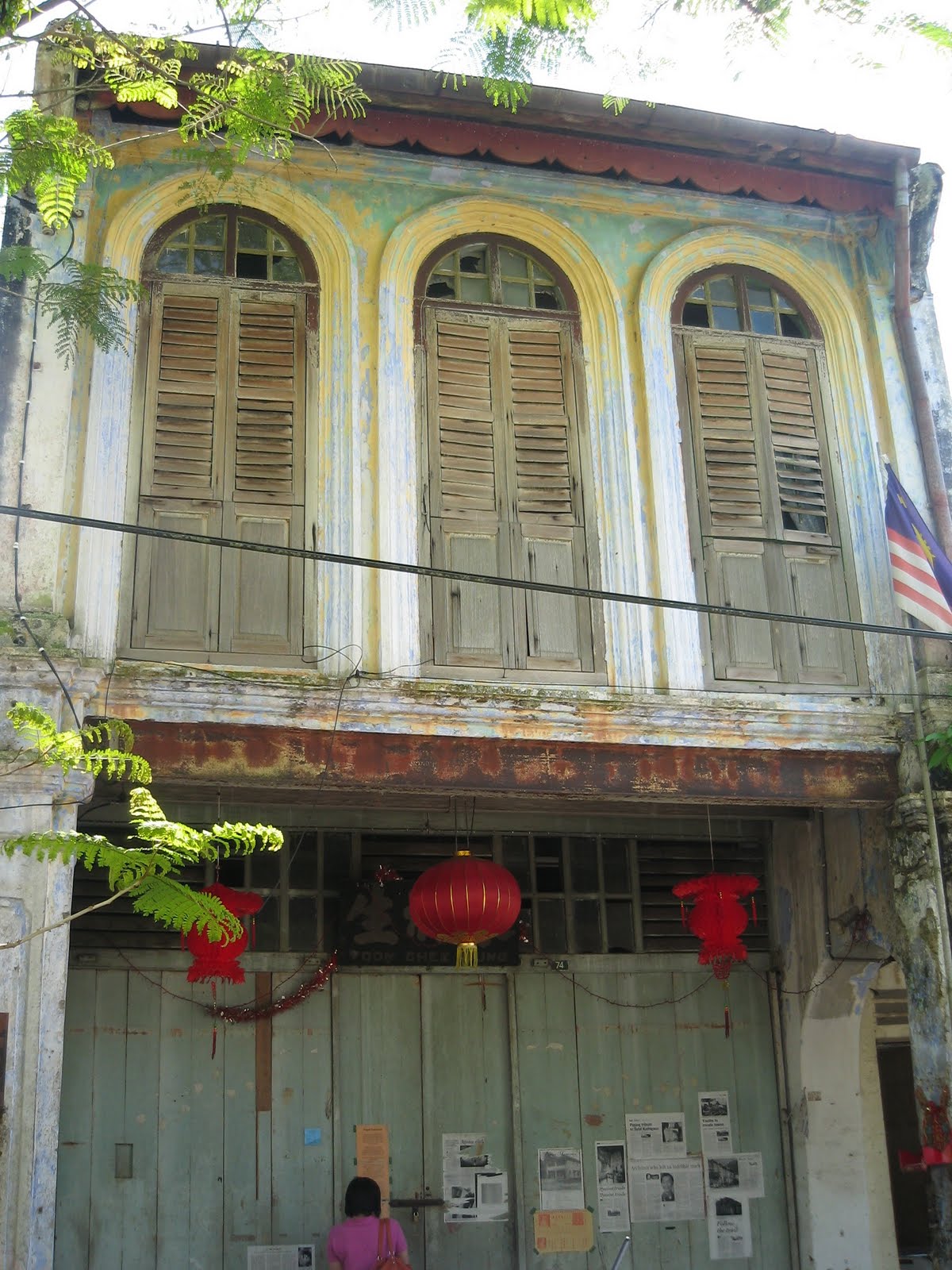
Papan Perak - More pictures of Main Street, Papan


Papan Perak - Sybil Kathigasu : Receipient of George Medal during WW2 in Malaya


No. 74 Main Street, Papan (off Ipoh) was where Sybil Kathigasu and her physician husband, Dr. A.C. Kathigasu ran a clinic. During WW2 and the Japanese Occupation in Malaya, they were aiding the Perak People Anti-Japanese Army (Later merged with the Malayan People Anti-Japanese Army – MPAJA) and Force 136 against the Imperial Japanese Army. They also had radio sets and listened to BBC broadcasts to provide updated information about the progress of the war to the secret operatives, on top of providing medical aid and supplies. Unfortunately, Sybil was arrested in 1943 and was interned in the Batu Gajah Prison. Even though she was flown to Britain after the war for treatment due to torture by the Japanese, she succumbed to her wounds in 1948 after being the first Malayan lady to receive the George Medal (granted in recognition of "acts of great bravery."). Her exploits were recorded in two books, “No Dram of Mercy” by Neville Spearman and “Faces of Courage :A Revealing Historical Appreciation of Colonial Malaya's Legendary Kathigasu Family” by Norma Miraflor & Ian Ward. Times of Malaya cir. 1940s

Suffolk House, Penang - Colonel Bannerman


Colonel Bannerman, Governor of Penang 1817 to 1819, stayed at the Suffolk House from 1818 to 1819, and was reported to have been visited by Stamford Raffles in the House in 1818– prior to Raffles founding of Singapore in 1819. Bannerman was the Father-in Law of William Edward Philip who built the house. He was quite resistant to Raffles establishing Singapore as another British colony and has not assisted Raffles in reinforcing the garrison of Singapore with sepoys from Penang, in a potential conflict with the Dutch whilst the latter was claiming Singapore for the British. However, he relented later due to Lord Hastings ( Governor General of India 1813 -1823)prompting. Times of Malaya cir.1800s

Suffolk House, Penang - More pictures


Suffolk House, Penang


The site of Suffolk House was originally the location of Captain Francis Light's residence from 1786 to 1794. ( He founded Penang Island for the British East India Company). The present Georgian Mansion which has been beautifully restored, was built between 1808 & 1811, to house a certain William Edward Phillips, who became Governer of Prince of Wales Island ( Penang Island) from 1820 to 1824. Times of Malaya cir. 1800s